







Many people assume that a stronger concentration of skincare ingredients automatically leads to faster results. They think that if a 0.05% cream isn’t working, they simply need to jump to 0.1% or a higher strength immediately. This logic is flawed and often leads to skin barrier damage rather than the desired complexion.
Tretinoin is not a simple cosmetic; it is a powerful vitamin A derivative. It works by changing how your skin cells behave at a genetic level. Instead of waiting weeks for old skin to shed naturally, tretinoin speeds up the entire turnover process. This makes it a medical-grade tool rather than a standard over-the-counter lotion.
While the term “Retin-A” is often used interchangeably with the active ingredient, it is important to distinguish between the brand name and the chemical itself. Tretinoin is a retinoid, which is a specific class of molecules. It is widely used in dermatology for a variety of skin conditions. For instance, tretinoin gel and cream are specifically indicated for the topical treatment of acne vulgaris.
It is a potent substance. If you use it incorrectly, you will face redness, peeling, and irritation. It requires a disciplined approach to application and a deep understanding of how the skin reacts to rapid cell turnover.
The Biological Mechanism and Clinical Uses
Tretinoin works by communicating directly with the cell receptors in your skin. When applied, the molecule enters the skin cells and tells them to divide and migrate to the surface faster. This process, known as accelerated cell turnover, is what helps clear out pores and smooth out fine lines. It is essentially a biological nudge to the skin’s natural renewal cycle.
Because it alters cellular behavior, its uses extend beyond simple acne treatment. It is a versatile tool in a dermatologist’s kit. While most people use it for surface-level issues, its medical history is much broader. In fact, tretinoin is a vitamin A derivative used to treat acne vulgaris and even certain types of promyelocytic leukemia.
When used topically, it is primarily focused on the epidermis. It helps prevent the buildup of dead skin cells that clog pores. This makes it effective for both inflammatory acne and the prevention of comedones (blackheads and whiteheads). It also helps with photoaging, which is the skin damage caused by long-term sun exposure.
The efficacy of the treatment depends heavily on the concentration and the delivery system. You will often find tretinoin in two main forms: gel or cream. The choice between these two can change how the medication is absorbed and how much irritation it causes. Some people prefer the lighter feel of a gel, while others find a cream easier to spread across larger areas without pulling on the skin.
Common Clinical Indications
- Acne Vulgaris: The most frequent use for topical tretinoin.
- Photoaging: Reducing the appearance of fine lines and sunspots.
- Hyperkeratosis: Addressing conditions where skin cells build up excessively.
- Skin texture improvement: Smoothing the surface of the skin through exfoliation.
It is not a magic wand. It takes months, not weeks, to see the full clinical effect. If you stop using it too early because you don’t see a change in ten days, you are wasting your time.
Navigating Strengths and Formulations
Choosing a strength is the first hurdle. Most dermatologists start patients on a low concentration to mitigate side effects. For example, tretinoin 0.025% cream is a common starting point. This low dose allows the skin to acclimate to the increased cell turnover without causing immediate, severe inflammation.
The concentration dictates the intensity of the “retinoid purge.” This is the period where acne might temporarily worsen as deep-seated impurities are pushed to the surface. While frustrating, it is a sign the medication is doing its job. If your skin becomes raw and weeping, you have likely used too much or a concentration that is too high for your current skin barrier.
The physical vehicle, whether it’s a cream, gel, or microdome, changes the experience. Creams often contain more emollients, which can be beneficial for people with dry or sensitive skin. Gels tend to dry faster and can feel slightly more “tacky” on the skin. It is a personal preference, but it can impact how you layer your other skincare products.
It is a slow process. Patience is necessary.
| Formulation Type | Best For | Texture/Feel |
| Cream | Dry or sensitive skin | Rich, moisturizing |
| Gel | Oily or acne-prone skin | Lightweight, fast-drying |
| Microdome | Targeted application | Controlled release |
Protocol for Safe Application
Application errors are the number one reason for tretinoin-induced irritation. Many users make the mistake of applying it to damp skin. Moisture on the skin’s surface can actually increase the absorption rate, making the medication hit the skin too hard and too fast. This is a recipe for a chemical burn.
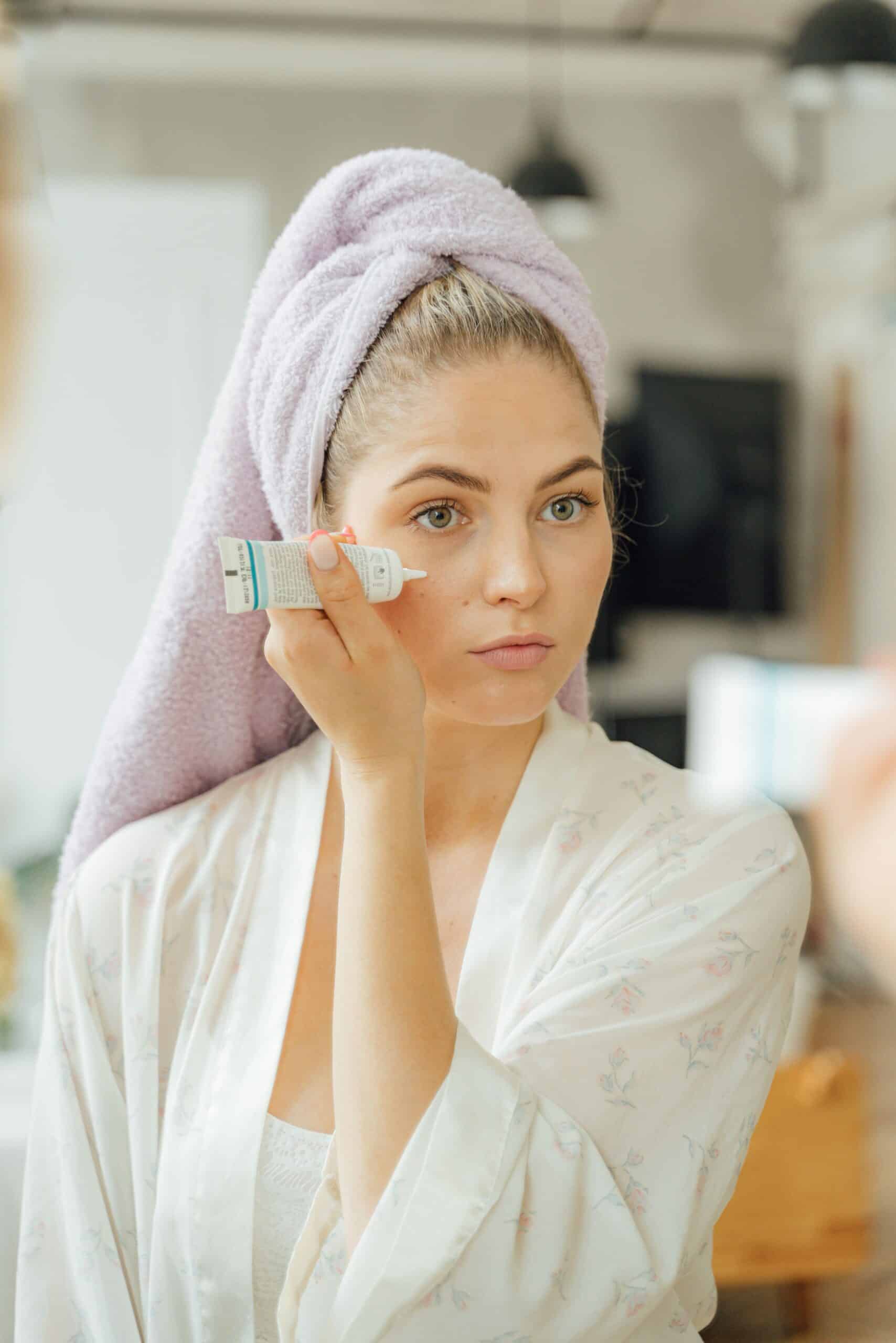
The standard procedure is to apply it to completely dry skin. You should wash your face, pat it dry, and wait at least 20 to 30 minutes before applying the tretinoin. This ensures the skin surface is dry and the pH levels have stabilized. Once applied, you must be careful with where the product lands. The product should be kept away from the eyes, the mouth, the paranasal creases, and mucous membranes.
The Pea-Sized Rule
Using too much is a common mistake. Many people think a thick layer will work better. In reality, a pea-sized amount is usually enough for the entire face. Using more won’t speed up results; it will only increase the risk of “erythema,” which is medical shorthand for redness and inflammation.
The Sandwich Method
If your skin is particularly sensitive, you might use the “sandwich method.” This involves applying a layer of moisturizer, then your tretinoin, and then another layer of moisturizer. This buffers the medication, slowing down the absorption and reducing the sting, without negating the clinical benefits of the vitamin A derivative.
Always use sunscreen during the day. Tretinoin makes your skin more sensitive to UV rays, meaning you will burn more easily. If you use tretinoin at night but skip SPF during the day, you are essentially undoing all the anti-aging benefits of the cream. The sun will damage the new, vulnerable skin cells faster than the tretinoin can help them.
Managing Side Effects and Skin Sensitivity
The transition period is often called “the purge” or “the retinoid ugly phase.” During the first few weeks, you may notice dryness, flaking, and even a temporary increase in breakouts. This is not necessarily a sign that the product is wrong for you. It is simply the skin adjusting to a new biological pace. Most people find this phase lasts between two to six weeks.
If you experience severe local erythema, or intense redness, you should scale back. This might mean using the product every other night or even every third night until your skin recovers. Once your skin builds tolerance, you can gradually increase the frequency back to once daily in the evening. Consistency is more important than intensity.
Diet and hydration play a role, too. When your skin is undergoing rapid turnover, it can feel dehydrated. Using a hyaluronic acid serum or a ceramide-heavy moisturizer can help support the skin barrier while the tretinoin does its work. Think of it as providing the building blocks the skin needs to rebuild itself properly.
Many people ask if it is safe to use tretinoin while breastfeeding. While topical absorption is generally low, you should always consult with your doctor before using prescription-strength retinoids during pregnancy or nursing. The precautionary principle in dermatology is to avoid high-strength retinoids during pregnancy due to the potential risks associated with systemic vitamin A intake.
Is it worth the irritation? If you can handle the initial dryness, the long-term results for skin texture and acne management are widely considered some of the most effective in dermatology. The key is to treat it like a medical treatment, not a cosmetic luxury. There’s a useful breakdown over at tretinoin creams.